
Head pain, including headaches and tension migraines, is a common issue that affects people of all ages. While medications can provide relief, many individuals are now turning to natural therapies like acupressure for a safer and holistic approach.
Acupressure is an ancient healing technique rooted in traditional Chinese medicine, where gentle pressure is applied to specific points on the body to relieve pain and restore balance. Let’s explore how acupressure can help ease head pain and which points are most effective.
Table of Contents
What is Acupressure?
Acupressure involves applying firm but gentle pressure using fingers, thumbs, or special tools on specific points known as “acupoints.” These points lie along energy pathways called meridians. By stimulating these areas, acupressure helps improve blood circulation, release muscle tension, and promote the body’s natural healing process.
How Acupressure Helps Head Pain
Headaches can be caused by stress, poor posture, dehydration, sinus issues, or eye strain. Acupressure targets the root causes by relaxing muscles, reducing stress hormones, and enhancing blood flow to the head and neck. It’s a simple, non-invasive technique that you can practice at home without any side effects.

Key Acupressure Points for Head Pain
1. Third Eye Point (Yintang)
Located between the eyebrows, this point is one of the most popular for relieving headaches and stress. Applying gentle pressure here helps calm the mind, reduce eye strain, and ease frontal headaches.
How to use:
Use your index finger to apply light pressure for 1–2 minutes while breathing deeply.
2. Union Valley (LI4)
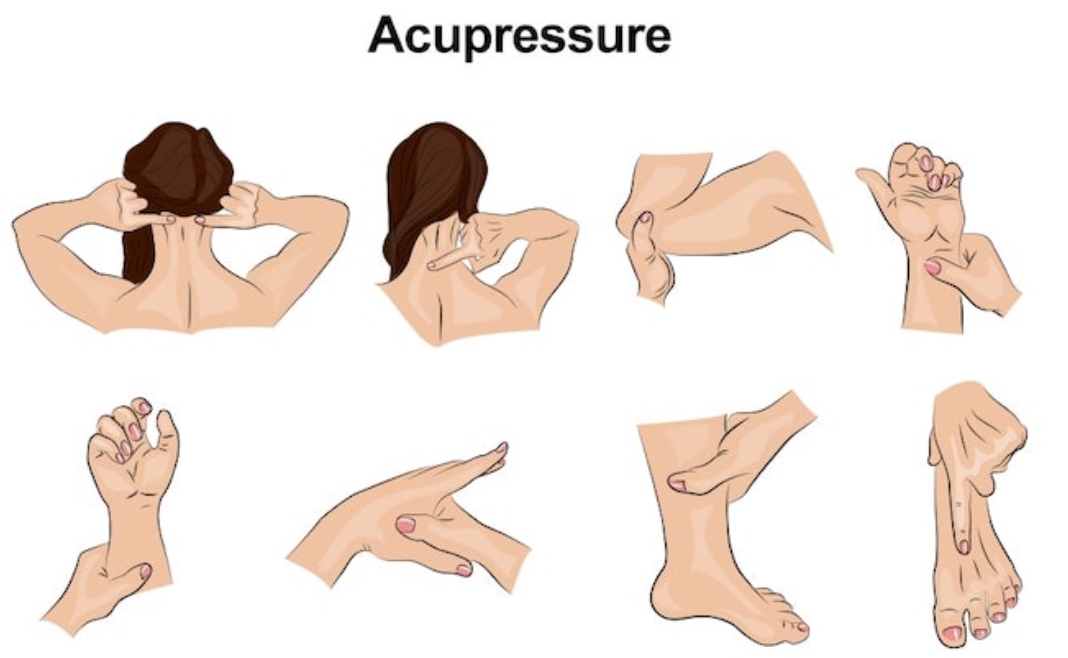
This point is found in the webbing between the thumb and index finger. It is widely used for pain relief, including headaches and migraines.
How to use:
Press firmly on this point for about 1 minute on each hand. Avoid using this point during pregnancy.
Also Read: 7 Best Acupressure Points for Acidity and Gas
3. Gates of Consciousness (GB20)
Located at the base of the skull in the hollow areas between the neck muscles, these points are excellent for relieving tension headaches, neck stiffness, and migraines.
How to use:
Use your thumbs to apply upward pressure for 2–3 minutes while tilting your head slightly back.
4. Drilling Bamboo (BL2)
These points are situated at the inner corners of the eyebrows. They are especially helpful for sinus headaches and eye-related pain.
How to use:
Press gently with your thumbs for 1 minute while keeping your eyes closed.
5. Shoulder Well (GB21)
Though located on the shoulder, this point is effective in relieving neck tension that often leads to headaches.
How to use:
Squeeze the muscle firmly with your fingers and hold for 1–2 minutes.
Tips for Best Results
- Always sit in a comfortable position before starting acupressure.
- Apply steady, firm pressure but avoid causing pain.
- Practice deep breathing to enhance relaxation.
- Repeat the process 2–3 times a day for better results.
- Stay hydrated and maintain good posture to prevent headaches.
Precautions
While acupressure is generally safe, it’s important to avoid applying pressure on injured or swollen areas. Pregnant women should consult a healthcare provider before trying certain points like LI4 or GB21. If headaches are severe, frequent, or persistent, it’s best to seek medical advice.
Conclusion
Acupressure offers a natural and effective way to manage head pain without relying on medication. By stimulating key pressure points like the Third Eye, Union Valley, and Gates of Consciousness, you can reduce tension, improve circulation, and find lasting relief. With regular practice, acupressure can become a simple yet powerful addition to your daily wellness routine.
Also Read: Acupressure Points Chart – Acupressure Points for Self Treatment