Our body is made up of nearly 60% water, which clearly shows how vital it is for us. Water supports almost every function of the body:
Importance of water to Maintains Body Temperature
Water helps regulate body temperature through sweating and respiration. During hot weather or physical activities, staying hydrated prevents dehydration and heat exhaustion.
Aids Digestion and Nutrient Absorption
Water is essential for breaking down food and absorbing nutrients. Without enough water, digestion slows down, leading to constipation, acidity, and discomfort.
Flushes Out Toxins
The kidneys require adequate water to remove waste products from the blood. Drinking enough water reduces the risk of kidney stones and urinary tract infections.
Supports Healthy Skin
Proper hydration gives the skin a natural glow, prevents dryness, and slows down early signs of aging. Water keeps skin cells moisturized and healthy.
Boosts Energy Levels
Even slight dehydration can make you feel tired, dizzy, or unfocused. Drinking enough water improves brain function, concentration, and overall energy.
2. Importance of Water in Daily Life
Water is not only essential for our health but also for our day-to-day activities:
Cooking and Cleaning
Cooking meals, washing utensils, cleaning homes, and doing laundry—every household activity needs water. Without it, maintaining hygiene becomes difficult.
Agriculture
Agriculture is the backbone of many economies, including India’s. Crops need water for growth, and farmers depend on rainfall, irrigation, and groundwater. Without water, food production would come to a halt.
Industries
Industries such as textile, paper, steel, and pharmaceuticals rely heavily on water for manufacturing, cooling, and cleaning processes. Water scarcity can impact industrial growth and employment.
3. Water and the Environment
Water plays a key role in maintaining ecological balance:
Supports Plant and Animal Life
Rivers, lakes, oceans, and wetlands are natural habitats for countless species. Water enables plants to photosynthesize, grow, and produce oxygen. Animals rely on water bodies for drinking, food, and shelter.
Large water bodies influence weather patterns and climate. Oceans absorb heat and release moisture into the air, which eventually falls as rain—keeping the water cycle alive.
Prevents Soil Erosion
Water helps bind soil particles together. Proper irrigation methods prevent soil erosion, which is important for maintaining fertile land.
4. Water Scarcity – A Global Issue
Even though Earth is covered with water, only about 1% is suitable for drinking. Many regions across the world face severe water shortages caused by:
Overpopulation
Pollution of rivers and lakes
Excessive groundwater extraction
Climate change and irregular rainfall
Water scarcity leads to droughts, crop failure, and lack of safe drinking water—affecting millions of people. Conserving water is not just a choice but a necessity.
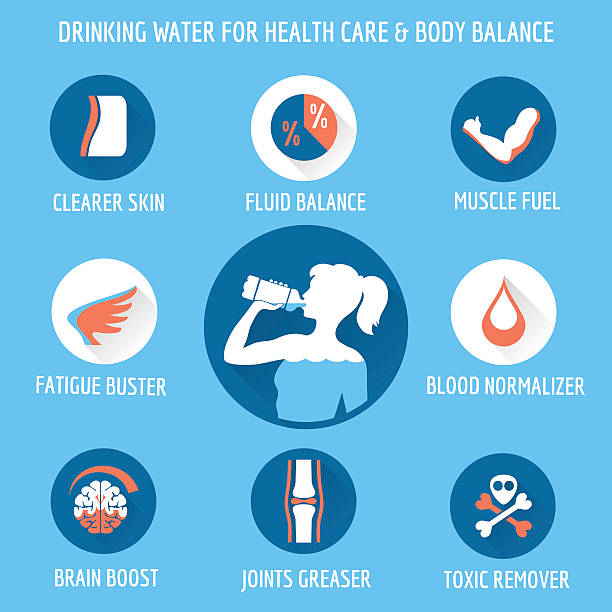
Drinking water for healthcare and body icons set. Vector illustration
5. How We Can Save Water
Water conservation starts with simple daily habits. Here are some effective steps:
Fix Leaks
A dripping tap can waste liters of water daily. Repairing leaks is one of the easiest ways to save water.
Use Buckets Instead of Showers
Bathing with a bucket uses far less water than long showers.
Turn Off Tap While Brushing
This small habit can save up to 10 liters of water every day.
Reuse Water
Water used for washing vegetables can be reused for watering plants.
Adopt Rainwater Harvesting
Collecting rainwater reduces dependence on groundwater and helps recharge the water table.
Choose Water-Efficient Appliances
Modern washing machines, taps, and flushes use less water without compromising performance.
6. Importance of Clean and Safe Drinking Water
Access to clean water is a fundamental human right. Contaminated water leads to diseases like diarrhea, cholera, and typhoid. Drinking purified or boiled water prevents health issues and strengthens immunity. Governments and communities must work together to ensure that safe drinking water reaches every household.
Conclusion
Water is truly the lifeline of our planet. From keeping our bodies healthy to sustaining agriculture, industries, and ecosystems, water plays a vital role in every part of life. Yet, despite its importance, water is one of the most misused and wasted resources. As responsible citizens, it is our duty to conserve water and protect natural water sources.
As winter arrives, so do chilly winds, dropping temperatures, and a greater risk of getting sick. While winter has its charm—cosy blankets, hot beverages, and…
When it comes to weight loss, the idea of a “magic pill” is incredibly appealing—and yet, unfortunately, reality is far more complex. If you’re looking…