
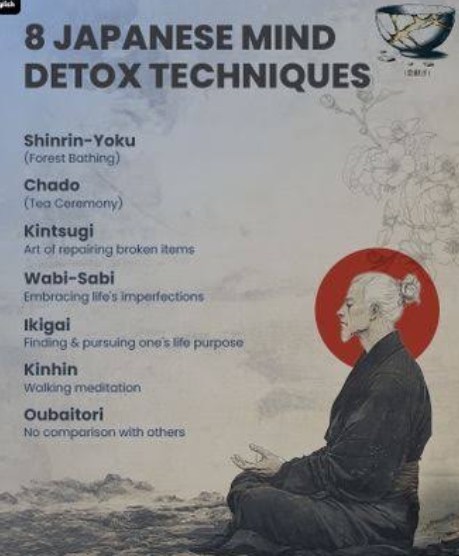
Japanese Mind-Detox Techniques
In today’s fast-paced world, mental clutter has become as common as physical fatigue. The Japanese approach to well-being offers a refreshing perspective—one that emphasizes simplicity, mindfulness, and harmony with nature. These time-tested mind-detox techniques and calming foods can help you reset your mental state, reduce stress, and cultivate inner peace.
Table of Contents
1. Shinrin-Yoku (Forest Bathing)
Shinrin-Yoku, or forest bathing, is one of the Japan’s most renowned mental detox techniques. This practice is not related to taking a bath in forest instead it involves mindfully immersing oneself in nature, particularly among trees and forests. Scientific research has demonstrated that forest walks can significantly reduce stress hormone levels, enhance mood, and improve concentration.
2.Kintsugi (Golden Joinery)
Kintsugi is a beautiful Japanese art form that involves repairing broken pottery with precious metals like gold, silver, or platinum powder. Kintsugi celebrates these cracks by making them more visible and beautiful.
This art form carries a profound metaphor for life, our flaws and imperfections don’t need to be hidden, they can be transformed into something beautiful and valuable.

3. Ikigai (Finding purpose of your life)
Imagine finding the sweet spot where your passions, talents, and life’s purpose perfectly align that’s called Ikigai. This is a powerful Japanese concept of discovering your reason for being. It’s like solving a personal puzzle with four pieces- what you love, what you’re good at, what the world needs, and what can support you financially.
But Ikigai goes beyond just finding the right career; it’s about creating a balanced, meaningful life that brings joy and purpose to your daily activities.
Also Read:Top 10 Health Benefits of Buttermilk
4. Kaizen (Continuous Improvement)
Kaizen is a powerful Japanese practice that embodies the principle of continuous improvement and never giving up. The word literally translates to “change for better” (kai = change, zen = good). At its core, Kaizen promotes the idea that small, consistent improvements lead to significant positive changes over time.
6. Kinhin (Walking Meditation)
A form of walking meditation that involves slow, deliberate steps with focused attention. It promotes relaxation, grounding, and mindfulness.
7. Chanoyu (Tea Ceremony
A ritualistic practice centered around the preparation and consumption of matcha tea. It promotes mindfulness, attention to detail, and improved concentration.
8. Oubaitori (Do Not Compare)
This concept encourages individuals to focus on their own journey and not compare themselves to others, fostering self-acceptance and reducing feelings of inadequacy.
Final Thoughts
Japanese mind-detox techniques are not about quick fixes—they are about creating a lifestyle rooted in balance, awareness, and simplicity. By incorporating practices like meditation, nature immersion, and mindful eating, you can gradually calm your brain and build resilience against stress.
Start small. Even one habit—like sipping matcha mindfully or taking a quiet walk—can make a noticeable difference. Over time, these small changes can lead to a clearer mind, improved focus, and a deeper sense of peace.
Also Read: mind detox